
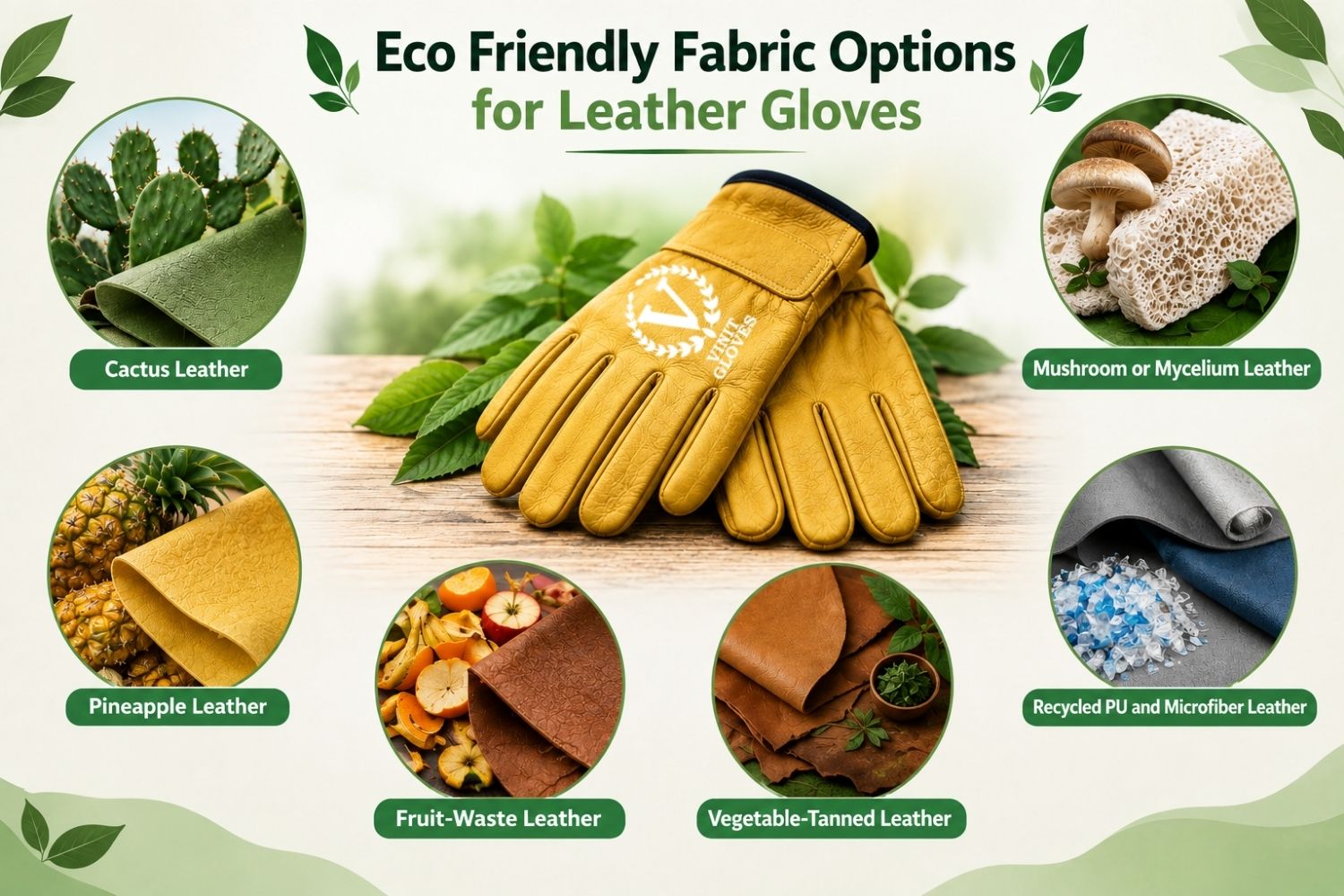
Eco Friendly Fabric Options for Leather Gloves
-

Vinit Gloves
-

31st August 2026
Today, you can see a growing demand for responsible products. Naturally, even glove manufacturers are trying to explore all those materials that can reduce environmental impact without impacting comfort or performance in any way. When you place orders with a sustainable leather safety gloves manufacturer, you can see various innovative alternatives being used these days, whether it comes to recycled synthetics or cactus-based textiles. Take a look at some of the top eco-friendly fabric options that are now being used for leather gloves before you place orders for them.
Cactus Leather
This is a breathable plant-based alternative. This type of leather is soft, flexible and highly breathable. It is partially biodegradable.
Cactus leather is usually associated with Desserto. It is made from mature nopal cactus pads. Cactus leather can be particularly useful for making gloves that need to be smooth in appearance and comfortable during use.
Mushroom or Mycelium Leather
These are part of a new generation of biomaterials. Mycelium leather is grown from the fungal root structure known as mycelium. It grows fast into a soft, dense mat that can resemble the textile properties of premium calfskin.
Mycelium-based materials, as compared to regular animal leather, can be absolutely biodegradable under suitable conditions. These have a soft texture and can be used for different types of finishes. Expectedly, these are particularly useful for brands that have to develop eco-conscious, premium gloves.
Pineapple Leather
Widely known as Piñatex, this form of leather is flexible and light in weight. It is manufactured with the help of pineapple leaf fibres that are discarded and left behind after the harvesting process is over.
This material is sustainably more advantageous because it is obtained from turning agriculture waste into useful textile. Almost every protective safety wear manufacturer prefers the use of Pineapple-based leather for the production of lightweight, smooth, flexible and highly abrasion-resistant gloves.
These types of gloves are relatively lightweight in construction which makes them perfect for light usage, as in fashion-oriented applications.
Fruit-Waste Leather
Food waste can now be transformed into fashion and fruit-waste leather is a prime example of this. Apple and grape leathers make use of waste matter generated by winemaking, juice production and other industrial activities.
Cores, skins and other leftover materials are now combined with bio-resins for manufacturing a supple, pliable textile. By using this approach, agriculture waste is given a new lease of life. The resulting material can be used for the production of dress and driving gloves. Fruit-waste leather gloves can be a fantastic alternative for all those applications where high flexibility, softness and visual appeal are the biggest priorities.
Vegetable-Tanned Leather
This type of leather is used by brands that want to produce genuine animal leather gloves. Vegetable training is a more eco-conscious processing option. It is a traditional tanning technique that skips the use of toxic chromium salts. Instead, it uses natural tannins that are obtained from the leaves and bark of trees.
Vegetable-tanned leather gloves are biodegradable in nature. These can be safer for use when produced in a responsible manner. However, this kind of leather does not satisfy vegan requirements completely.
Recycled PU and Microfiber Leather
These offer another option to reduce dependence on virgin resources. Generally, such types of materials use polyurethane along with recycled polyester or rPET backing. These are not completely biodegradable or natural. However, the use of recycled plastic waste can help to reduce demand for virgin materials derived from petroleum while manufacturing gloves.
Recycled PU or microfiber leather is known for versatility and consistency in texture. Naturally, these are practical for various types of glove designs.
Which Options Should You Go For?
Cactus, pineapple, mycelium, and fruit-waste materials can be attractive options for comfort-focused or fashion applications. Vegetable-tanned leather is perfect for buyers who need genuine leather that is manufactured using a more traditional tanning process. Recycled PU and microfiber options come with recycled content and stand out for durability as well as consistency.
Ultimately, you should choose only those eco-friendly options for leather gloves that satisfy intended use, durability, necessary protection, environmental goals and comfort requirements. Order these from a leading manufacturer who can help you to balance performance with responsible sourcing.
Recent Posts
-
Vinit Gloves
-
12th October 2026

-
Vinit Gloves
-
30th September 2026

-
Vinit Gloves
-
26th September 2026
Tags:
- Eco-friendly Safety Gear Vendors
- Environmentally-friendly Gloves Suppliers
- Ethical Safety Gloves Exporter
- Industrial Leather Gloves Manufacturer
- Leather Gloves Exporter India
- Leather gloves manufacturer India
- Leather Safety Gloves Manufacturer
- Leather Safety Gloves Manufacturer India
- Leather Safety Gloves Supplier
- Leather Welding Gloves Manufacturer
- Leather Work Gloves Manufacturer
- Organic Gloves Wholesaler
- Recycled Glove Suppliers
- Sustainable Leather Safety Gloves Manufacturer
- Sustainable Leather Safety Gloves Vendors
- Wholesale Sustainable Gloves Maker
Let’s Build Something Exceptional
Our products are made from high-quality genuine leather, durable linings, and premium hardware, crafted to ensure strength, style, and long-lasting performance. Each piece is carefully crafted with attention to detail, combining craftsmanship.
Our products are made from high-quality genuine leather, durable linings, and premium hardware, crafted to ensure strength, style, and long-lasting performance. Each piece is carefully crafted with attention to detail, combining craftsmanship.
Our products are made from high-quality genuine leather, durable linings, and premium hardware, crafted to ensure strength, style, and long-lasting performance. Each piece is carefully crafted with attention to detail, combining craftsmanship.
Our products are made from high-quality genuine leather, durable linings, and premium hardware, crafted to ensure strength, style, and long-lasting performance. Each piece is carefully crafted with attention to detail, combining craftsmanship.